Allan Edward Wentzel (24 February 1939 – 19 July 2026)
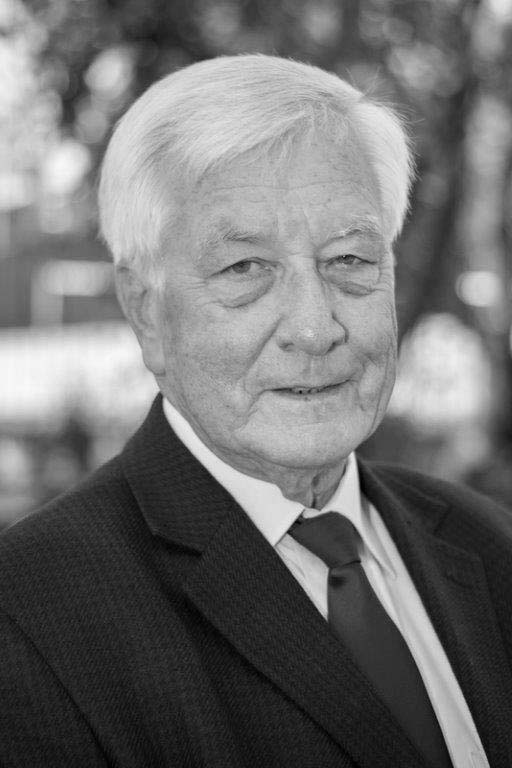
Tribute by Rod Bulman (21 July 2026)
I heard yesterday afternoon of the death of Allan Edward Wentzel on 19 July 2026. His daughter has confirmed the news to colleagues. For those of us who worked with him on the boards he shaped, this is a moment to understand the scale of what has been lost.
Allan was a chartered accountant (CA(SA)) whose career bridged mainstream finance and grassroots development in a way few in South African business have managed. He built his own accounting and tax practice over many years and also ran a company secretarial service – the kind of quiet, unglamorous groundwork that later underpinned his reputation as someone institutions could trust with their governance and their money.
His most defining early achievement was serving as founding Chief Executive of the original African Bank, established in 1975 to extend banking and credit access to previously disadvantaged individuals at a time when mainstream banks would not. He led the institution for around five years, at the coalface of one of the first serious efforts to bring banking to communities systematically excluded from it. He was present at the creation of an entire strand of what would later be called financial inclusion in South Africa.
He carried that instinct – using financial discipline in service of people otherwise locked out of capital – through the rest of his working life. He was:
- A long-serving director and trustee of Ditikeni Investment Company and the Ditikeni Trust, the B-BBEE investment vehicle built to hold and grow assets on behalf of civil-society shareholders;
- Lead Independent Non-Executive Director and Chairman of the Audit and Risk Committee at Safari Investments RSA Ltd, a JSE-listed REIT, where he also sat on the Nominations, Remuneration, and Social and Ethics committees;
- The driving force behind, and Vice-Chairman of, CDT Foundation NPC, the ecumenical loan fund that has spent decades lending to Christian churches and organisations shut out of conventional bank finance – a direct continuation of the mission he began at African Bank;
- Involved in the formation and JSE listing of Kilimanjaro Investments Limited, among the first Black-owned groups to list on the exchange;
- A director of Transfer Administrators (Pty) Ltd, providing governance and management advice across the non-profit and BEE sectors;
- Chairman of The Summit Educational Trust and of Inanda Seminary, one of South Africa’s oldest schools for girls;
- Chairman of the UPCSA Pension Fund;
- The first lay person to head the United Congregational Church of Southern Africa, and Vice-Chairman of the Investment Committee of the Council for World Mission in London, where he had oversight of a fund of more than £100 million;
- A director of Papkuilsfontein Vineyards (Pty) Ltd, Church Investors Group of South Africa, Riwa Investment Holdings, Bench Marks Foundation, and Active Shareholder – each a platform serving the public interest.
What comes through in every one of these roles is a consistent pattern: Allan never treated commercial rigour and social purpose as competing demands. He brought the discipline of a chartered accountant and the eye of an experienced bank CEO to institutions – churches, schools, empowerment trusts – that badly needed both and rarely had access to someone who could offer them at his level.
For those of us holding governance roles today, the honest measure of the hole he leaves is this: very few people combine deep technical financial competence with decades of sustained, hands-on commitment to institutions serving the historically excluded. Allan proved those two things were not in tension, and a great many organisations – from a listed property REIT to small congregations needing a loan to finish building their church – will feel the absence of that combination.
I knew Allan as a colleague for over twenty years, and in that time, he was a constant inspiration. His quiet demeanour and gently but firmly put arguments could mask an unwavering moral compass – an unshakeable conviction that he was called to live out “loving God” and “loving his neighbour” with equal commitment. His unerring choice of the ethical over the expedient, or the more lucrative, often gave me the courage to follow his example. In so many ways he was a lodestar, not only to me, but to the various committees and boards on which I served alongside him.
I miss him already.
Our thoughts are with his wife, June, and their family at this time.
Warm regards

RRV Bulman, BCom, MSocSci
Trustee